
Book of the Royal Art, Volume I:
Candidate’s Handbook
Earth Alchemy
Part I
The Royal Art Society Curriculum:
Holistic World-view and Holistic Medicine
The Royal Art Society curriculum, or Alchemist’s Curriculum, is composed of twelve steps:
- The Physical Environment
- Meditative Posture
- Relaxation
- Breathing
- Concentration
- Health and Healing
- Visualization
- Building world-view
- Mnemonic map
- Understanding
- Wisdom
- Ritual and Mysticism: Embracing the One
The Twelve Steps of the Alchemist’s Curriculum address all twelve microcosmic organs and follow their study in the chapters of the Book of the Royal Art, but do not run exactly parallel to them. These steps are outlined through the course of the chapters of the Book of the Royal Art. Guidance for creating a mnemonic map and building one’s own world-view is detailed and time consuming and therefore makes up the bulk of the book.
Understanding and wisdom will be comprehended with experience after the previous steps of the program have been mastered. The official statement on mysticism, meant in the sense of identifying or “being at one” with the source of being and life, as opposed to the superstitious sense, is fittingly saved for the end of the manuscript.
Step One of the Alchemist’s Curriculum:
The Physical Environment
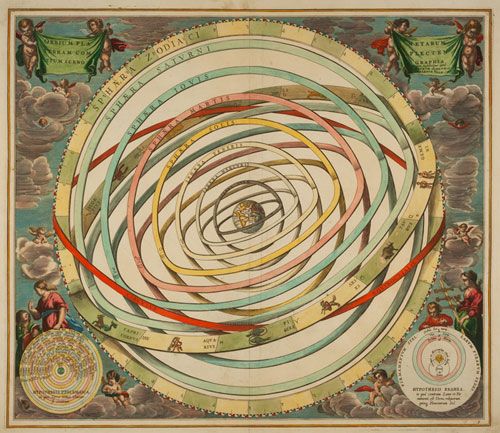
The whole physical Cosmos is the first subject of the Alchemist’s Curriculum, especially that which pertains to the Observer, the “fifth element” of the Royal Art. In alchemical symbolism, the material elements fire, water, air, earth combine to form the fifth element of Spirit (life-force and awareness). Physical geography, climate, architecture, interior design, furniture, implements, vestments, and other paraphernalia, in short, everything related to the “smells and bells” of ritual are first considered in the introduction to the Alchemist’s Laboratory and are given a final treatment in the last chapter of the third volume of the Book of the Royal Art.

According to every professional scientist in favor of a sustainable environment, and that includes nearly every respected scientist in the world, the powers that be are ignoring the science and dragging the human race into disorder and extinction. This is not good, wise or intelligent, yet the actors involved are still turning a profit in the realms of energy, science and international affairs. The Royal Art Society seeks to remedy this disorder in the body politic.
The human laws of the earth must change to reflect the will of the people and the wisdom of science. The people must be alchemically educated, employed and moved to participate in their own government. This is the only way that the environment, community and business will survive in an overpopulated and highly competitive future. Humans, like other plants and animals, live according to natural cycles. Humans depend on cycles to sleep and wake, to plant and harvest crops, and to reproduce. Ritual is naturally part of human existence and is a central feature of the Royal Art.

The Royal Art Society does not insist on particular meditations for the four traditional times of day: dawn, noon, evening, and midnight, or for the four divisions of the year, the four directions, the four elements, praise of the good, or denunciation of evil. These are all, however, contained in the rites of the Royal Art Society. The sacrifice may be a daily ritual including the ringing of a bell, the lighting of a flame and incense, the pouring of water and tea, and concentration on posture, breath and chant. The entity or life-force is invoked, using one or more invocations or exercises, as appropriate, before a flame, an altar, a mandala, the northern pole star, the sun or the moon.

Ritual
If an altar is used it may be empty or it may hold a single source of light, and perhaps incense, unless the alchemist prefers more tangible instruments of ritual. If the alchemist is meditating the Elixir of the Seven Seals, he or she enters the Laboratory from the North-East, sounds the ceremonial bell, ignites incense on a separate shrine in the East in memory of those who have preceded him, and bows. They then ignite a flame in each of the four cardinal directions, beginning with the East, bowing in each direction. Finally they kneel or stand before the Altar of the Royal Art, and light the Sacred Fire, bowing afterward.
No special garment is required, though the alchemist may reserve special clothes for meditation, nor is any single posture or ritual essential. Royal Art Society members may wear a distinctive outfit to distinguish society officers from other priests and ritualists, as every temple has its own extravagant wardrobe.
The laboratory coat is fitting to the alchemist and scientist, and scientific research has shown wearing one raises cognitive abilities in students. The lab coat is clean and minimalist, elegant, yet clinical and down-to-earth. The alchemist may experiment wearing different color lab coats during ritual, such as white, black, gray, brown, or crimson.
Instructions in these matters are suggestions, not demands, and the adept need move only on the astral plane, in the subconscious mind, to accomplish vision or visualization. Besides breathing naturally, one need move not at all to accomplish meditation.
Inner alchemical method begins with posture and a conscious and progressive deep relaxation from toes to crown, with focus on breathing, which activates the blood and the body. Blood becomes the elixir of life and the body becomes the staff of life. The Art centers upon the recitation of scripture, chant, or song, which activates the mind and the nerves. Thus the mind is transformed into the ‘Philosopher’s Stone,’ which produces ‘True Gold.’ This method is the universal medicine that produces total health. It is the Dao, Samadhi, Nirvana and the Heavenly Kingdom.
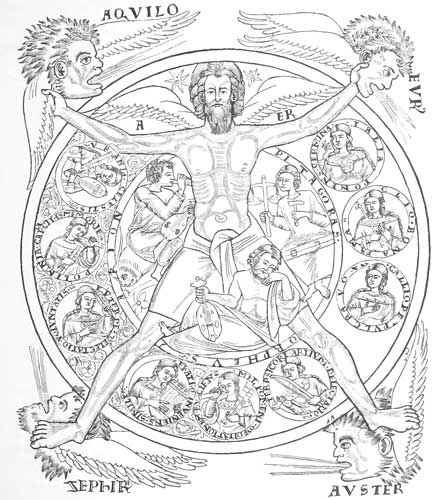
The Twelve Microcosmic Functions of Internal Alchemy
Alchemists, like all individuals who are motivated to realize their own full potential, seek some form of instruction outside of the traditional educational system. The traditional university system is not designed or prepared to develop fully all the faculties of the human being. Indeed, the educational system has its hands full with just the training of the memory and the intellect for practical tasks. This kind of education is by nature necessary to a productive economy, training employees for government and industry, while society’s leaders are mainly groomed in private Ivy League oriented schools.
People from all walks of life are improved by meditation, self-discipline and culture. This is not included in the core curriculum of the common university or public school. A new model of society must be designed and executed. However, it is not the responsibility of the elite to hunt down and educate the potential Immortals or Illuminati of the global public. Fellow students of life can only be resources for one another. One must become responsible for one’s own education and cultivation. The Book of the Royal Art is an essential guide and reference for international literati.
There are two factors to consider when designing a system that is intended to educate a human being. The first is substance‑ what is to be taught. The second is method‑ how the material will be taught. Rather than allowing the intellect and memory superior positions in the learning program, all the functions of the human shall be developed into a balanced and coordinated whole.
The competence of each function is interdependent with the competence of every other function, to varying degrees. For example, an individual with a high intelligence may only be a danger to self and others if the intellect is guided by extreme and unrestrained emotion or desire. Another example may be the uselessness of all the other functions when an individual has low self-esteem and is perpetually depressed.
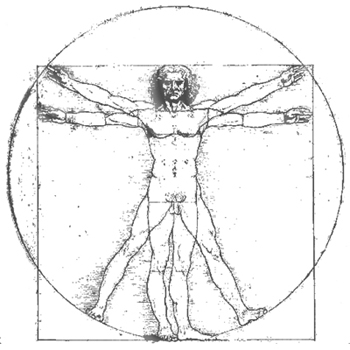
The twelve-fold alchemical system of attainment being offered here touches upon the twelve functions of wisdom, understanding, memory, the will or self-esteem, the imagination, consciousness, emotion, the intellect, the autonomic nervous system, the senses, the physical body, and most importantly, the harmonization and integration of all the above functions. These are called the Twelve Microcosmic Functions.
These functions are explained in terms of the traditional conception of the central function: pure awareness or pure consciousness. This consciousness is called pure because it is said to represent the whole universe perfectly; it is a microcosm of the universe, and contains within it inherently the potential for a holistic knowledge and understanding of the universe. This central function is also identified with the imagination, because the imagination represents one’s total idea of oneself in relation to the world.
The Structure of the Twelve Functions
What one observes is not an actual world, but only one’s own impressions of an actual world. The world one observes is called the internal world, while the actual, unobservable world is referred to as the external world. Tranquil awareness is the human source of creation, and is considered the center of the human being just as the cosmic source of creation is considered the center of the cosmos. The Apprentice shall undoubtedly formulate a better idea of this state of mind as the other faculties surrounding pure consciousness are considered.
This categorization of the parts of the whole human seems as arbitrary as any, yet for the purposes of science and internal alchemy the twelve-fold scheme seems the most suitable. The sixth or central function is the consciousness, itself. All the functions act upon this hub. We learn first how to isolate the twelve functions and then we cease to use them.
That is, we exhaust the physical body through exercise or fasting, we withdraw from the senses and calm the nervous system, harmonize our will, still our emotion, rest in pure awareness, quiet our thoughts- our imagination and intellect- and detach our self from memories. We organize our knowledge to cultivate understanding, and coordinate that knowledge for wisdom.
We train each of these functions, transcending each in its turn. Of the twelve Microcosmic Functions exercised by the alchemist, the Apprentice studies the first seven – the physical, the senses, the autonomic nervous system, the will, the emotions, the central awareness or consciousness, and the imagination – in the basic curriculum of the Royal Art Society, the Alchemist’s Curriculum. The Master Alchemist studies the next four alchemical functions of the human being: the intellect, the memory, understanding and wisdom. The final grade, the Mage, Immortal or Illuminatus, focuses on the mysticism of the Seven Seals and embracing the One, or no-mind.
Internal Alchemy is a form of holistic medicine, with a holistic, educational world-view. Medicine seeks the origin or causes of order and disorder in living beings. The most important anatomical organ of the human being is the brain, which forms most of what is called the mind. The mind contains the senses, the memory, the imagination, the intellect and the emotions.
The structure and content of memory may be called the world-view. The world-view has a great effect on both perception and behavior. It has been determined that because a people or community do not have an idea of the whole system of life and human society, that they make unreasonable demands, complaints, and decisions. This can only be remedied with true knowledge, understanding and wisdom.
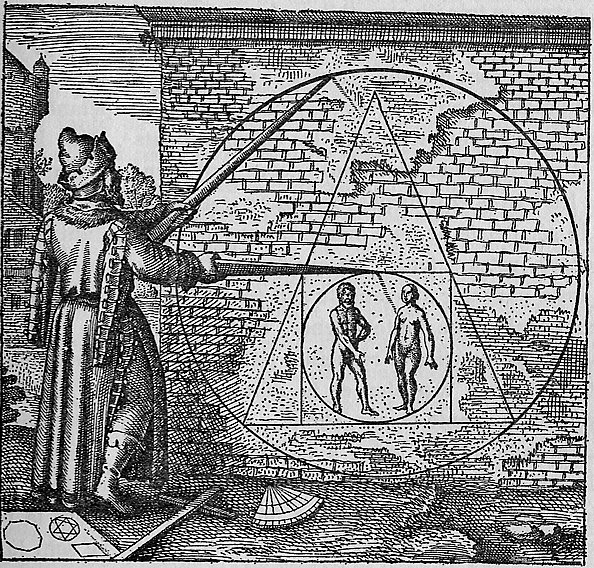
The Twelve Microcosmic Functions
As a holistic world-view, the internal alchemy of Book of the Royal Art is the ultimate medicine for ethical and political pain and disorder. This book involves a brief discussion of the similarities and differences between various popular world-views in history. When the assertion is made that a specific world-view is in disorder, the disorder is defined, and the causes of this disorder may be determined.
Every system of enquiry must establish a set of technical symbols with which to define, measure and communicate. Alchemy teaches the ideals of balance or moderation, for constant extreme usage of any one faculty causes misfortune. Today, intellects are exaggerated and interfere with the proper functioning of our other resources.
The Royal Art, a holistic education, medicine and martial art, exercises these other aspects of our being, to which we are so insensitive, faculties that we have allowed to become weak or even inactive. They are listed here from one to twelve, beginning with the most basic and superficial function, and concluding with the highest.
- Physical body: the material elements‑ fire, water, air, earth‑ which combine to form an environment of which the non-material element (mind, consciousness, or spirit) is an integral part. Be aware of balance and form.
- Senses: the instruments through which we observe the world. The ability to observe events.
- Autonomic nervous system: the involuntary reflexes and internal movements – beyond conscious control, but may be consciously and actively altered.
- Will: the ability to direct motion through the use of force. Use pure will.
- Emotion: irrational nervous and hormonal reactions. “These are my emotions.”
- Consciousness: awareness. What we observe is not an actual world, just our impressions of an actual world.
- Imagination: the faculty of producing artificial perceptions in the mind without the use of the senses. “This is when I am using my imagination.”
- Intellect: our thoughts, be they based on reason or fallacy, balance or exaggeration. “I am thinking.”
- Memory: the ability to observe a sequence of events, and to retain and recall impressions of those observations.
- Understanding: The proper organization of knowledge.
- Wisdom: The proper coordination of knowledge in one’s actions.
- The One, or the Way: the total sum of and harmony between all the other elements, achieved by the alternate relaxation and concentration of the seven functions.
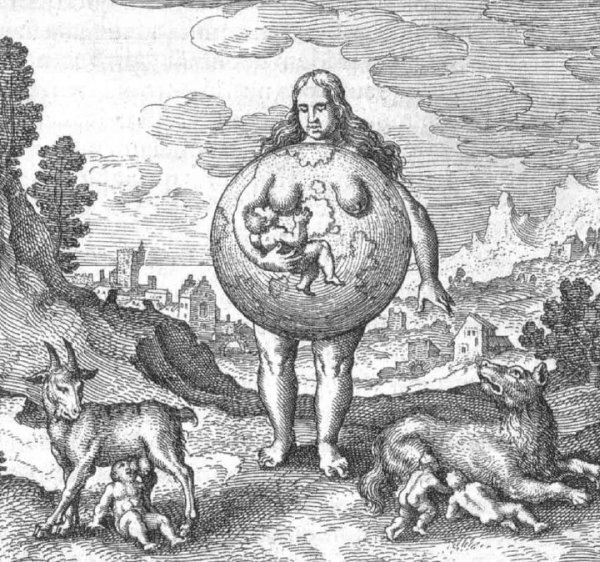
The First Microcosmic Function: The Physical Body
The first faculty that must be maintained in good condition is the physical body. This is the most superficial level of existence, but the human must keep it in good health in order to have energy. Flexibility exercises and light workout routines are necessary to maintain health. The first concern is the physical health of the alchemist and it is up to the alchemist to decide how to fulfill these needs. Self-defense training is encouraged as a good, wholesome exercise.
Advanced training exhausts the mind’s resources and the body’s limited strength. With continued hard practice the human individual is forced to find the unlimited energy source that exists beyond human muscle and human thought. In other words, the life-force is brought to the forefront to do what the individual self is not able to do. This life-force must eventually be gathered and stored moment to moment in daily affairs rather than expended unwisely. This kind of cultivation is the union and harmony of complete relaxation and firm concentration.
Always consult a licensed physician or health care provider before starting any new physical exercise. It is by repetition and intensity of experience that the intellect and the autonomic nervous system are conditioned into adaptive or maladaptive habits. The physical body naturally adapts itself to health and survival exercises. By periodic ritual or meditation, emotional charge is directed into survival and healthy practices. Cultivating relaxation and concentration allows the mind to be calm, aware, and very flexible.
To be flexible is to be adaptive, to be adaptive is to survive, and to survive is to be strong. Thus, to be strong, one must be flexible. When the mind is not calm, the ability to flow with events, or to respond quickly and accordingly to changes, is debilitated. Once the human has balanced and harmonized its mind and body, the integrated, whole being is in good health (barring circumstantial medical disorders) and happiness. Happiness is defined by this fluid yet wholesome existence. Living a truly happy life is the ultimate goal of life and of every method offered in the Book of the Royal Art.
The Second Microcosmic Function: The Senses
The Apprentice is instructed to study, contemplate, sharpen and transcend the senses, which the human being uses as tools to observe the external world. The Tang Dynasty Qingjing Jing, or Classic of Purity and Stillness, refers to the five senses (sight, hearing, smell, taste and touch) along with thought as the ‘six thieves,’ which, with the ‘three poisons’ of lust, greed and anger, are destroyed only when the emotions are overcome, the mind calm and the spirit pure.
The Third Microcosmic Function:
The Autonomic Nervous System
The Apprentice alchemist is taught how to consciously alter his or her own automatic responses, and how to replace previous acquired conditioning. Some automatic responses are ineffective and even harmful to the individual, but through years of repetition of incorrect response, the human does not change even its most self‑destructive habits. Hence, the alchemist is to acquire an awareness of the outcome of certain reactions to particular situations. The alchemist is to make correct associations between actions and their effects using the reason and scientific method required by the Royal Art.
The human organism will heal itself mentally and physically if proper attention is paid to the aberration able to heal. Humans tend to care for their physical ailments but leave mental wounds unhealed. As survival in the physical world becomes easier, it becomes possible to concentrate more on subtler realms, beginning with the mind. Royal Art Society alchemy is a system designed to condition the automatic reflexes and the conscious choices of the human individual to their utmost effectiveness in physical survival.
The alchemist will learn scientific methods of government and economy that apply to individuals as well as groups. Starting as ritual and culminating in international law, the Royal Art is a branch of modern science that promotes and protects the health of the whole individual, as well as the body politic of the world.
The alchemist takes responsibility for even his or her own rewards. Even when one is free from external reward, one is still a functional and happy person, teammate, employer or employee, and citizen. When one no longer accepts rewards from external influences, one no longer is subject to punishment. The alchemist who achieves complete authority over his own state of mind may be influenced, but never controlled, by external pressures. At this point of attainment in training, once the alchemist has overcome all preferences for external conditions, he is ready to overcome the preference for internal conditions, that is, the alchemist must transcend even his preference for joy!
The alchemist’s understanding of the meaning of survival should ideally evolve during his or her training. Survival of the fittest is, after all, the key to life. Walking into the laboratory for the first time, one usually has an idea of survival for oneself. This may also be expanded to protection of loved ones. What the beginner usually wants to protect is one or more body. During training, the alchemist learns to forget the body and concentrate on life-force. One loses the fear of bodily harm and seeks only to protect life-force. Sooner or later, the alchemist begins to understand that life-force is within all people, and all living creatures, in varying qualities and quantities.
A mature alchemist is no longer interested in protecting only an isolated body or a single family of human bodies. One understands how life-force flows undivided through all things; fire, water, air, earth, life and consciousness. At this enlightenment it is up to the alchemist to decide whether one will protect all forms of life or retire and isolate oneself from society. The first is the path of stewardship; the second is the path of the recluse or hermit. Both paths of the alchemist have their rewards.
Step Two of the Alchemist’s Curriculum:
Meditative Posture
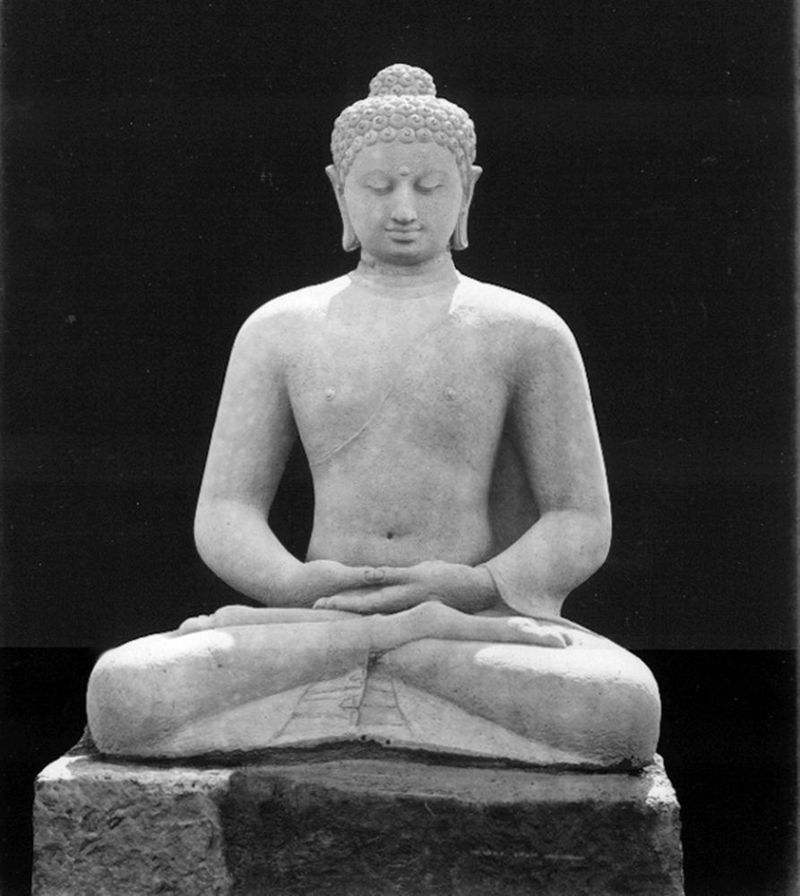
There are four traditional ways to sit that are comfortable for most people. Sitting on a cushion really helps. During meditation, if you get too uncomfortable, you can change from one position to another. As you practice you will be able to sit still much longer.
The most natural position is simply to fold your legs at the knees and sit on your heels, but put a cushion over your heels. Thus, one may intermittently draw energy from the source of life-force by bending forward to rest one’s head on the ground (the earth) and placing the forehead (the Third Eye) within the triangle made by laying the hands flat on the ground. The tips of the index fingers are touching and the tips of the thumbs are touching. This may be done alternately with raising one’s hands into the air and looking upward into the heavens while sitting erect.
The half lotus position is like ‘Indian style,’ but the right leg rests completely on top of the left. An advanced posture is the full lotus, where both heels rest on the opposite leg. In standing meditation, life-force can be raised up from the center of the earth through the heels, with visualization. Yogic, Buddhist and Daoist postures are usually safe, healthy and enlightening, but one must use moderation and be careful to avoid over-strenuous positions. Walking and running are healthy basic forms of active meditative posture.
This is key – you must keep a very straight spine. Imagine you are balancing a teacup on the crown of your head. Imagine a line running vertically through the earth, your spine, and up into the sky. This may not feel good at first, but eventually you will grow into it, believe it. Gently reminding yourself to keep an erect spine throughout the day will also help your posture and meditation.
As a regular exercise, practice breathing from your center of gravity or ‘One-Point.’ Deep breathing will assist your posture, making you conscious of the tilt of your pelvis and lumbar region. Keep your pelvic muscles contracted and your abdomen firm when you stand and walk. In public, this meditation may be done sitting, standing, walking, and generally going about one’s business, quite naturally. These guidelines should be considered with the advice of a licensed health care provider such as a physical therapist or physician.
Step Three of the Alchemist’s Curriculum: Breathing
Breathing is the perfect and natural foundation for meditation, as it represents spirit, life, and the polarity of opposites. Every manifestation has a foundation, a center and an apex; a rising, expanding, falling, and resting stage. Thus the universe is merely a repetitive expression of this pattern or cycle. Like inorganic forces, all organic processes occur in cycles that may be marked by opposite actions. From sleep and waking periods to muscle relaxation and contraction, from sense and motor functions to nutrient consumption, the organic body is organized bisymmetrically.
The physical body must alternate between periods of strenuous exercise and deep relaxation and therapeutic massage, and the mind must also exercise its functions with varied experiences, ongoing research including study of the liberal arts, and active conversation and debate with other human beings. The mind must also receive its own “therapeutic massage” with the experience of stability, visualization, and meditation.
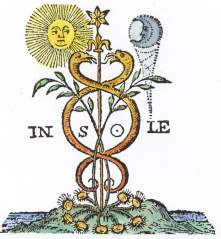
It is essential that knowledge of linear polarity be supplemented with knowledge of cyclical or spiral processes. While awareness of balance is vital to health, the memory-intellect-imagination complex is best organized under a spiral or s-curve format. Prominent examples include the serpents upon the Wand of Hermes, the Kabbalistic Tree of Life, the circulation of Kundalini through the chakras, or the Chinese taiqi (yin and yang) symbol. This should be kept in mind when constructing the trestle board of the Royal Art: the mnemonic map.
In meditation, one must draw distinctions between each pole, the Macrocosm and the Microcosm, on every breath.
Inhale is “stop,” rest, relax;
Exhale is “go,” motion, work, focus.
One may use the seven models below, one at a time or one full breath for each pair, for a total of seven refreshing breaths, as an aid to meditation. On inhaling, allow the energy to overwhelm you. On exhaling, force the energy within you to the extreme. In time, the distinctions will cease and the whole will be one state – Communion – the Chymical Wedding.
| Inhale (Immortal)
o I. Microcosm in Macrocosm o II. Cosmos (the Universe) o III. Expand Throughout Heaven o IV. Relaxation o V. Open Mind to Increase Potential for the Spirit o VI. Receive the Spirit, Life-force (Being Filled With Spirit) o VII. Rising, Expanding (Life) | Exhale (Mortal)
o I. Macrocosm in Microcosm o II. Self (the Human) o III. Contract, Sink into Earth o IV. Stability o V. Strengthen Your Devotion and Resolve to be with the Spirit o VI. Concentrate o VII. Falling, Resting (Symbolic Death) |

Step Four of the Alchemist’s Curriculum: Relaxation
Relaxation methods begin by relaxing the physical body. This relaxed state expands throughout the body, releasing muscle tension, stress on the organs, and even the activity of the brain. When one practices relaxation techniques, it is important to not slip into a state of unconsciousness. The way to maintain conscious awareness during deep relaxation is to concentrate. Concentration techniques are taught simultaneously with relaxation, because the correct harmony of these two seemingly opposite states is one way to reach a state of pure awareness.
Lie down comfortably, knees and neck supported with the proper pillows, arms at your sides or crossed upon the chest, and legs uncrossed; the “Empty Posture” of the Phoenix Elixir or Lesser Elixir of the Book of the Royal Art (below). Imagine warmth in the very tip of your left big toe, and let your toe relax as the warmth fills it.
Where the warmth goes, you will relax, and it must move smoothly and consistently. Very slowly let it rise up through the whole toe. Let it fill each toe in turn, and fill the whole foot, let it slowly rise up your leg, and when it reaches your pelvic area, begin with the toe of the other leg, until both legs are filled with the warmth.
Let the warmth proceed up the spine and spread out to fill your torso, each arm at a time- to the finger-tips- the neck, and head, until your whole body is filled and relaxed. At this time, just let the warmth continue to relax your body until you are energized. Concentrate on your breath, which should be natural, but even and deep. When you sit up, you may clap your hands four times to wake up, or ring a bell. You can do the exercise sitting up, or even standing, if you have to, but do it lying down, first. Practice each night before you sleep.